
Connections Hint Forbes: The Definitive Guide to Mastering Daily Puzzle Hints
Whether you’re a seasoned puzzle solver or a curious newcomer, the phrase connections hint Forbes has likely crossed your path during a Google search. This phrase refers to the daily guidance and structured support that Forbes provides for the hugely popular New York Times (NYT) Connections word puzzle — a cerebral challenge where players sort sixteen words into four themed groups. In this comprehensive authority piece, we’ll explore what connections hint Forbes really means, why it matters, and how to use it effectively to improve your puzzle-solving skills — all while strengthening your vocabulary, reasoning, and pattern recognition along the way.
In the sections that follow, we’ll unpack the game mechanics, the role Forbes plays in the puzzle ecosystem, advanced solving strategies, common pitfalls, and how connections hint Forbes fits into broader cognitive and cultural trends. By the end, you’ll not only understand the term deeply — you’ll be equipped to leverage these insights to solve puzzles consistently with confidence and skill.
What “Connections Hint Forbes” Really Means
At its core, connections hint Forbes refers to the daily posts and structured guidance that Forbes publishes to help players tackle the NYT Connections word puzzle. These pieces typically offer spoiler‑free nudges about the puzzle’s theme categories, gentle clues that nudge your thinking, and — optionally — full solutions and explanations after a clear spoiler warning.
Unlike answer dumps, connections hint Forbes content is crafted to help players think conceptually and strategically. It’s less about handing you the solution and more about guiding your reasoning, encouraging you to understand connections between words, and reducing frustration without diminishing the challenge. The result is guidance that feels intentional and skill‑building rather than merely indulgent.
How the NYT Connections Puzzle Works
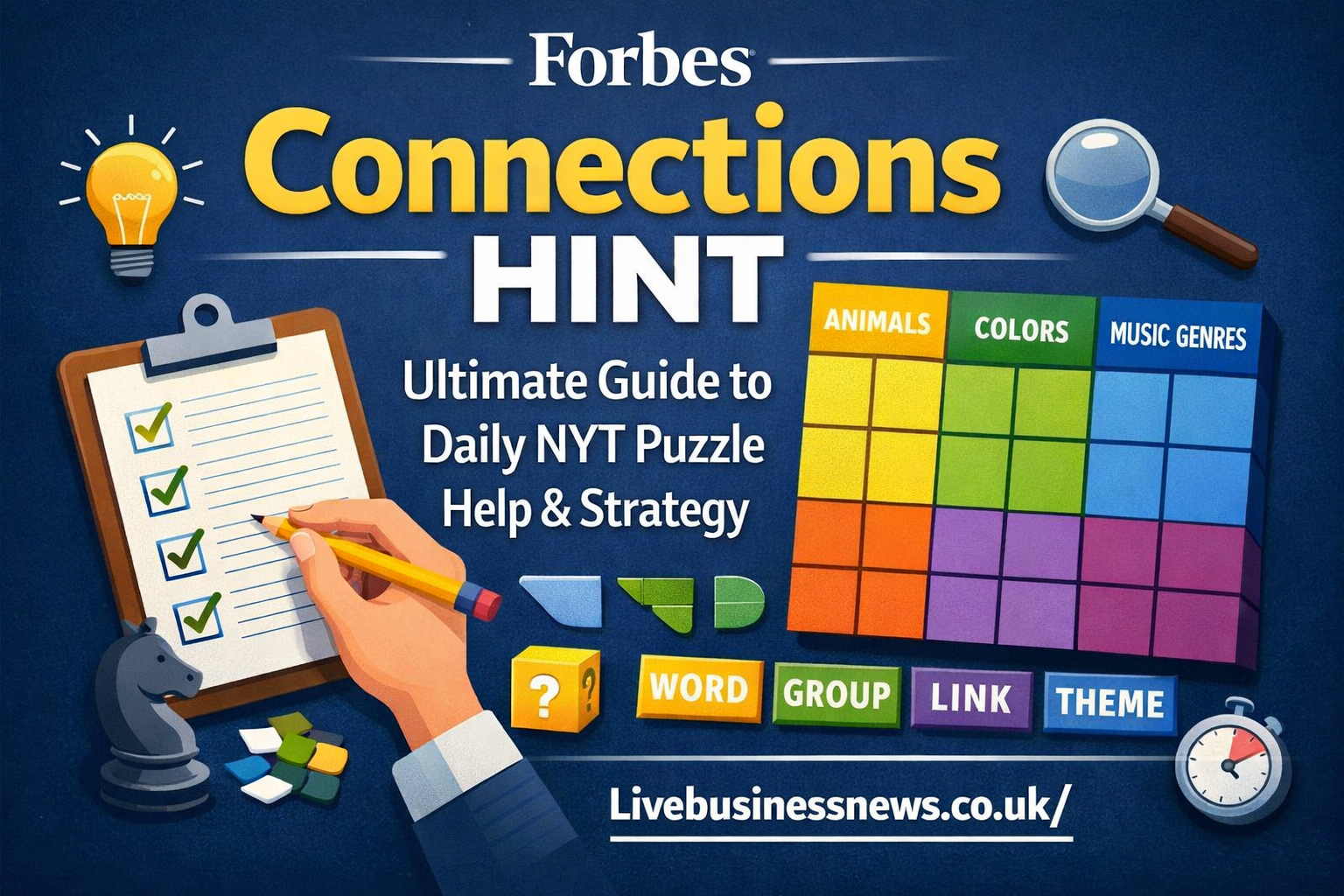
The NYT Connections puzzle tasks players with sorting 16 seemingly unrelated words into four groups of four — each group sharing a hidden theme or conceptual link. Players must make correct groupings before exceeding four mistakes, making careful observation and pattern recognition critical.
Each group in the puzzle is naturally ranked by difficulty:
• Yellow – typically the easiest, most obvious connections
• Green – moderate difficulty
• Blue – harder, requiring more nuanced links
• Purple – the trickiest, with subtle or abstract ties
A successful “Connections” solver uses both deductive and lateral thinking: you eliminate obvious sets to narrow the field, test logical clusters, and watch for red herrings — words that seem connected but belong in a different theme. Forbes‑style hints help refine this reasoning without depriving you of the satisfaction of solving.
Why Players Rely on Connections Hint Forbes
Connections hint Forbes isn’t simply a keyword — it’s a reflection of how puzzle solvers think. Many players pursue these hints for a few key reasons: preservation of streaks, deeper learning, time efficiency, and engagement with an intelligent community.
Players who don’t want to spoil their own experience appreciate that Forbes organizes clues from gentle thematic hints to contextual insights before presenting answers. This gradation gives solvers agency over how much help they receive. It’s the difference between a nudge and a full reveal — and that balance is why connections hint Forbes has become a daily ritual for so many.
The Anatomy of a Forbes Hint Post
When you open a connections hint Forbes post, you’ll typically encounter a familiar and deliberate structure:
• Intro & Spoiler Warning: A clear signal that guidance begins, with an option to read only hints or scroll further for complete solutions.
• Theme Hints: Four clues — one per group — revealing conceptual guides like “words related to seasons,” “places you record data,” or “things associated with celebrations.” These are designed to illuminate without revealing exact word groupings.
• Strategic Insights: Commentary on the more difficult groupings, how words might mislead, and tips for avoiding common traps.
• Full Answers (Optional): A section clearly labeled after the hints that lists each group’s four words along with explanatory notes.
This structure allows players to choose how much assistance they want, preserving challenge while offering education and improvement.
How to Use Hints Without Ruining the Challenge
Using connections hint Forbes most effectively means engaging with clues in stages:
• Start with the puzzle alone to identify any rewarding patterns on your own.
• If stuck, read only the initial theme hints to guide your thinking without spoiling.
• Use Forbes’ strategic observations to refine your remaining groupings.
• Only reveal complete solutions after you’ve exhausted your reasoning or want to compare your approach.
This method trains your mind over time, making you less dependent on hints and ultimately more adept at seeing patterns independently. It preserves the cognitive satisfaction that makes puzzles fun in the first place.
Advanced Strategies You Can Learn from Hints
Beyond simple nudges, connections hint Forbes helps you build sophisticated solving habits. Two such strategies include:
1. Pattern Recognition Through Elimination:
When you find one group, remove it from consideration and look at the remaining words with fresh eyes. This reduces the cognitive load on your working memory, making it easier to detect subtle connections in harder groups.
2. Guard Against Red Herrings:
Many words are chosen specifically for overlapping meanings. Forbes sometimes signals when a word might fit more than one logical group — not to mislead you, but to make you aware of multiple interpretations. Recognizing those tricky overlaps builds real insight over time.
Both techniques transcend a single puzzle and improve pattern recognition in broader cognitive tasks.
The Role of Community & Shared Learning
The popularity of connections hint Forbes goes beyond individual use — it creates a shared puzzle culture. Solvers discuss hints, strategies, and even unusual word groupings on social media platforms, forums, and group chats. This collective dialogue enhances the experience and anchors connections hint Forbes as not just a search term but a social ritual among players.
Common Misconceptions About Puzzle Hints
Some players assume that using connections hint Forbes means “cheating.” In reality, the best practice is using hints to enrich learning without replacing critical thinking. Good hints guide your reasoning, they don’t hand over answers outright — and that’s precisely what Forbes aims to provide.
Another misconception is that hints make puzzles too easy. On the contrary, quality hints act like scaffolding: they help you reach the next rung without short‑cutting the climb, improving your long‑term ability to recognize patterns and solutions on your own.
Comparison: Forbes Hints vs Other Puzzle Help Resources
Here’s a structured comparison showing how connections hint Forbes stands out among common puzzle help sources:
| Resource Type | Hint Style | Spoiler Control | Strategic Insight | Community Engagement |
| Forbes Hints | Gentle theme cues→explanations | High | Strong | Active discussions |
| Generic Answer Sites | Direct answers | None | Minimal | Limited |
| Independent Blogs | Varies | Varies | Sometimes | Depends |
| Puzzle Forums | Player‑derived tips | Depends | Moderate | Very high |
This table shows that connections hint Forbes blends structured guidance with strategic insight and community relevance — a combination that fosters both improvement and enjoyment.
Real‑World Benefits of Solving with Strategic Hints
While seemingly a leisure activity, regularly working through puzzles like NYT Connections — especially with expert hints — has cognitive benefits. You train your executive functions: working memory, flexible thinking, inhibition control, and pattern detection. Combining this with guided insights accelerates learning and increases resilience against mental blocks.
Moreover, this practice extends beyond puzzles. Professionals who navigate complexity, ambiguity, and pattern recognition in their jobs may find that the analytical habits honed through puzzles sharpen real‑world decision‑making and reasoning.
Conclusion
The phrase connections hint Forbes is more than a keyword — it’s a daily gateway into smarter puzzle solving, cultural participation, and cognitive growth. What began as a simple puzzle support tool has become a trusted ritual for solvers around the world because it balances challenge with guidance, rigor with learning, and intuition with insight.
Whether your goal is to preserve a solving streak, sharpen your mind, or simply enjoy an engaging morning challenge, connections hint Forbes offers a structured, educational, and satisfying way to approach the NYT Connections puzzle day after day.
Frequently Asked Questions
What does connections hint Forbes mean?
Connections hint Forbes refers to the daily clues and guidance Forbes provides to help players solve the NYT Connections word grouping puzzle with strategic, spoiler‑controlled support.
How can I use connections hint Forbes without revealing answers?
Read only the thematic hints and strategic clues in the post — avoid scrolling to the full solutions until after you’ve attempted your own grouping.
Why do so many players search for connections hint Forbes?
Players search for this term because Forbes’ structured hints help them maintain streaks, learn new solving strategies, and engage with an expert‑oriented approach to the puzzle.
Will relying on hints hinder my puzzle‑solving skills?
When used progressively and thoughtfully, connections hint Forbes helps build your reasoning skills, making you less dependent on hints over time.
Is connections hint Forbes free to access?
Yes — all hint articles and guidance from Forbes are publicly accessible without subscription barriers.
 Admin
Admin