
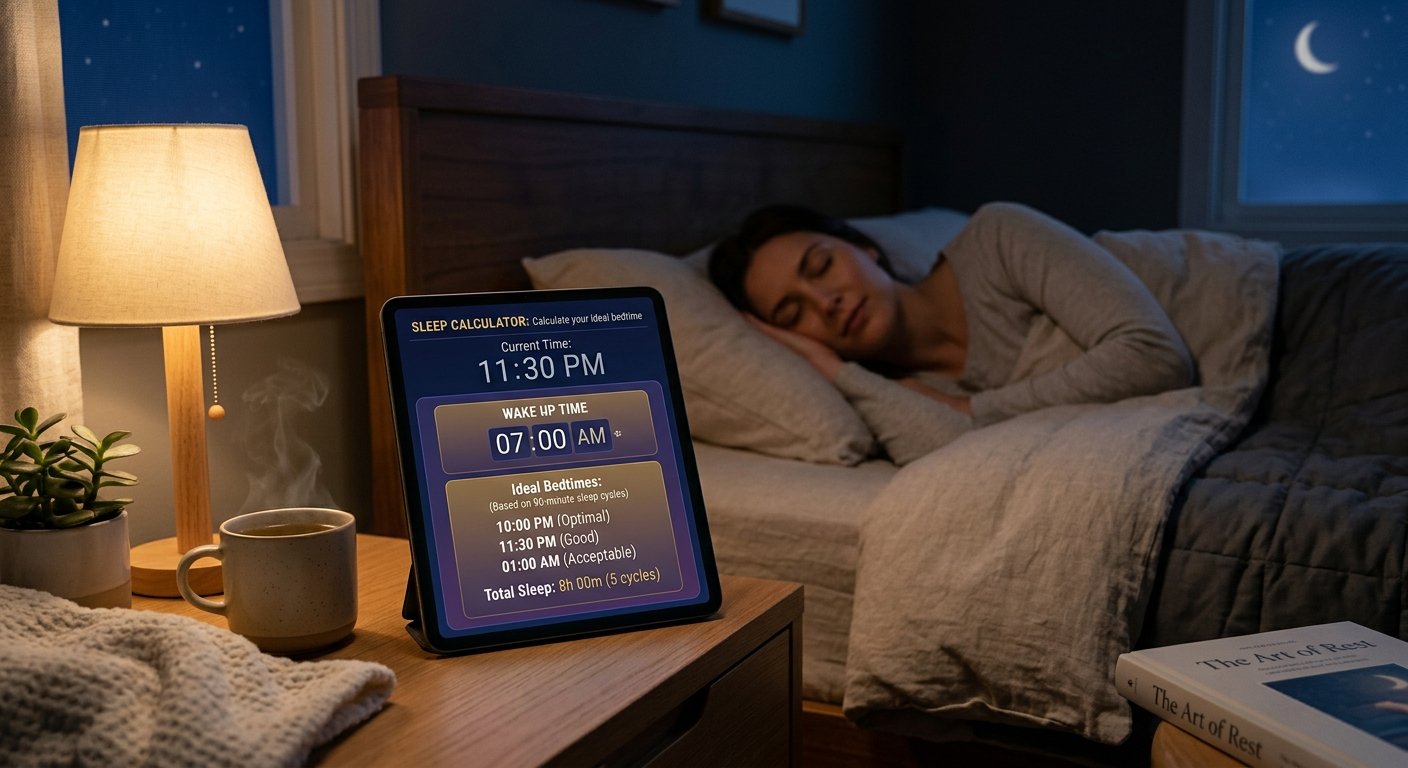
The detailed biography table below outlines essential sleep metrics, ideal cycle targets, and key health guidelines tailored by life stage:
| Life Stage | Age Bracket | Ideal Sleep Duration | Recommended Sleep Cycles | Average Sleep Latency | Best Bedtime Range | Primary Health Goal |
| Infant | 4 to 12 months | 12 to 16 hours | 8 to 10 cycles | 10 to 20 mins | 6:30 PM – 7:30 PM | Brain development |
| Toddler | 1 to 2 years | 11 to 14 hours | 7 to 9 cycles | 10 to 20 mins | 7:00 PM – 8:00 PM | Physical growth |
| Preschool | 3 to 5 years | 10 to 13 hours | 6 to 8 cycles | 15 to 20 mins | 7:30 PM – 8:30 PM | Motor skills & learning |
| School Age | 6 to 12 years | 9 to 12 hours | 6 to 8 cycles | 15 mins | 8:00 PM – 9:00 PM | Memory & focus |
| Teenager | 13 to 18 years | 8 to 10 hours | 5 to 6 cycles | 15 to 20 mins | 9:30 PM – 10:30 PM | Hormone balance |
| Adult | 18 to 60 years | 7 to 9 hours | 5 to 6 cycles | 15 mins | 10:00 PM – 11:30 PM | Daily recovery & immune support |
| Older Adult | 61 to 64 years | 7 to 9 hours | 5 to 6 cycles | 15 to 20 mins | 9:30 PM – 10:30 PM | Brain health |
| Senior | 65+ years | 7 to 8 hours | 4 to 5 cycles | 20 mins | 9:00 PM – 10:00 PM | Cellular repair & longevity |
Why Waking Up Refreshed Feels So Hard
Have you ever slept for eight hours and still woke up feeling groggy? You are not alone. Many people struggle with morning tiredness despite spending plenty of time in bed. The issue usually comes down to timing rather than pure hours. When an alarm goes off during deep rest, the brain experiences sleep inertia. This creates a heavy, foggy feeling that can ruin the entire morning.
Using a sleep calculator helps solve this common problem by tracking your natural patterns. Instead of guessing when to turn off the lights, you plan bedtimes around complete body rhythms. Understanding how your mind rests empowers you to make smarter evening choices.
Understanding the Power of a Sleep Calculator
A reliable sleep calculator works as an intelligent clock for your bedtime routine. It calculates exact times to wake up or drift off without interrupting critical recovery stages. The human body moves through distinct biological cycles every single night. Waking up at the end of a full wave allows you to open your eyes naturally with energy.
By utilizing an accurate hours of sleep calculator, you remove guesswork from your nighttime habits. You simply choose your ideal wake-up time, and the tool suggests exact moments to close your eyes. It even factors in the extra minutes it takes most adults to fall asleep. This smart scheduling helps protect your energy levels all day long.
The Biological Science Behind 90-Minute Sleep Cycles
Human rest is not one long, continuous block of darkness. Instead, your brain moves through structural loops lasting roughly 90 minutes. Each cycle includes light rest, deep rest, and rapid eye movement (REM) activity. Deep rest restores muscles and tissue, while REM rest organizes memories and boosts creativity.
When an alarm startles you in the middle of deep rest, your brain panics. You feel cranky because your body was forced to jump out of a heavy recovery stage. An accurate sleep calculator ensures you rise right at the transition phase between cycles. Matching your alarm to this natural window makes waking up feel effortless.
How to Use an Hours of Sleep Calculator Effectively
Using an hours of sleep calculator is quick, practical, and highly effective. First, decide the exact time you must step out of bed for school or work. Next, work backward in 90-minute blocks to find ideal bedtimes. Most healthy adults perform best after completing five or six complete cycles per night.
Always add about 15 minutes to account for sleep latency, which is the time it takes to drift off. If you must wake up at 6:30 AM, aiming for bed at 10:45 PM or 12:15 AM works best. Checking these numbers on a sleep calculator ensures your schedule supports true bodily recovery every single night.
Finding Convenience with a Modern Sleep Calculator App
In our modern digital world, tracking rest has never been easier. Downloading a mobile sleep calculator app turns your smartphone into a daily wellness assistant. These mobile tools send gentle bedtime reminders so you never lose track of time while watching TV or scrolling.
Many mobile applications also sync with wearable fitness bands. They track actual movement and heart rates to fine-tune your personal cycle lengths. Having a sleep calculator right on your phone keeps your health goals top of mind. It helps convert smart resting habits into an effortless daily lifestyle routine.
Exploring Insights from the Sleepopolis Sleep Calculator
Popular tools like the sleepopolis sleep calculator have helped thousands improve their nightly recovery. These platforms combine age-based research with straightforward mathematical formulas to offer personalized bedtime recommendations. They highlight how resting needs shift as humans age, from childhood through senior years.
Testing a structured tool like the sleepopolis sleep calculator gives you clear visual options for your night. You can easily adjust variables based on whether you feel tired or need extra recovery. Relying on a tested sleep calculator provides confidence that your schedule rests on sound human biology.
How Age Impacts Your Daily Sleep Requirements
Sleep needs evolve throughout a person’s life. Newborn babies require up to 17 hours of rest daily to support rapid brain growth. School children need roughly 9 to 12 hours so their minds can process new learning. Teenagers require 8 to 10 hours due to major physical growth spurts and hormonal changes.
Most adults thrive on 7 to 9 hours, while older seniors often complete 4 to 5 cycles comfortably. An age-adjusted sleep calculator tailors schedule suggestions to your exact biological stage. Recognizing these changing life requirements prevents under-sleeping or over-sleeping as you grow.
The Hazards of Chronic Sleep Deprivation
Consistently missing full cycles creates a heavy debt in your mind and body. Shortening rest causes poor concentration, mood swings, and weakened immunity over time. Brain health drops significantly when deep recovery stages are cut short night after night.
Using an hours of sleep calculator protects you from chronic exhaustion. It acts as a safety barrier against burn-out by showing the minimum cycles needed for functional health. Setting realistic bedtimes with a sleep calculator ensures your heart, immune system, and mind stay strong long-term.
Practical Habits to Fall Asleep Within 15 Minutes
Even the best scheduling tool cannot help if you toss and turn for hours in bed. To lower sleep latency, create a quiet, dark, and cool bedroom environment. Keep bright electronic screens away at least 30 to 60 minutes before bedtime. Blue light tricks your brain into thinking it is still daytime.
Try relaxing habits like reading a physical book, light stretching, or drinking warm herbal tea. Pairing these soothing rituals with recommendations from your sleep calculator app helps your body drift off quickly. Consistency trains your internal clock to fall asleep on command.
Adjusting Your Schedule for Shift Work and Travel
Not everyone works a traditional morning schedule. Shift workers and frequent fliers face unique challenges maintaining steady circadian rhythms. If you work nights, use a sleep calculator to plan non-traditional 90-minute recovery windows during daylight hours.
Blackout curtains, eye masks, and earplugs help recreate nighttime conditions in bright rooms. Setting your sleep calculator to target complete 5-cycle blocks ensures quality rest regardless of what the clock says outside. Adaptability allows you to keep your energy high even with demanding hours.
Conclusion: Transform Your Mornings Today
Taking control of your sleep routine is one of the best choices you can make for your health. By understanding natural 90-minute rhythms, you can stop waking up tired and start every day full of energy. A sleep calculator takes the confusion out of planning by giving you clear, customized bedtimes. Whether you use an online tool, a desktop planner, or a mobile sleep calculator app, timing your rest around complete cycles yields massive rewards. Start calculating your optimal bedtime tonight, and enjoy waking up refreshed!
What is your biggest bedtime challenge? Share your thoughts or questions in the comments below!
Frequently Asked Questions (FAQs)
What is a sleep calculator?
A sleep calculator is a digital health tool that calculates your ideal bedtime or wake time based on natural 90-minute cycles and fall-asleep buffers.
How many hours of sleep do adults need every night?
Most healthy adults need between 7 and 9 hours of quality rest per night, which equals 5 or 6 complete biological cycles.
Why do I feel tired after sleeping for 8 full hours?
Feeling groggy after 8 hours usually happens when an alarm interrupts deep sleep mid-cycle. Using an hours of sleep calculator helps align wake-ups with lighter recovery phases.
How long does a normal sleep cycle last?
An average human rest cycle lasts roughly 90 minutes, moving through light rest, deep rest, and REM stages.
Should I use a sleep calculator app every day?
Yes! Utilizing a sleep calculator app daily builds consistent habits and helps reinforce your body’s natural circadian rhythm.
How long does it take the average person to fall asleep?
The average healthy adult takes about 15 minutes to fall asleep after turning off the lights. A good sleep calculator adds this buffer automatically.