
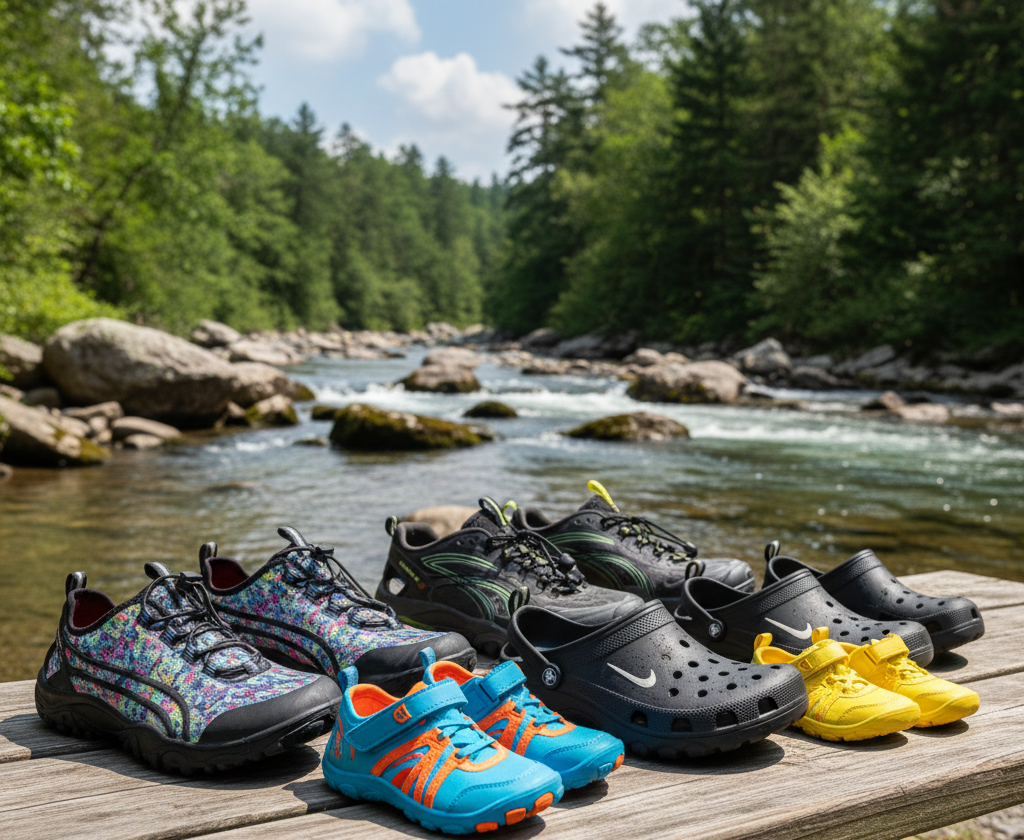
Have you ever ruined a good pair of sneakers by wearing them into a lake? Or maybe you have stepped on a sharp shell at the beach and wished you had something on your feet. We have all been there. Summer fun often means getting wet, but regular shoes just aren’t built for it. They get heavy, soggy, and take forever to dry.
This is where specialized water shoes come to the rescue. They are the unsung heroes of beach days, kayaking trips, and rocky river hikes. Unlike flip-flops, they stay securely on your feet. Unlike sneakers, they are designed to get soaked and drain fast. In this guide, we will dive deep into why you need them and how to pick the perfect pair for the whole family.
Why Regular Shoes Just Don’t Work in Water
I remember going on a rafting trip years ago wearing old running shoes. I thought it would be fine. It was a huge mistake. The moment my feet hit the river, the shoes soaked up water like sponges. They felt incredibly heavy, making it hard to swim. Worse, they stayed damp for two whole days, leading to smelly feet and blisters.
Regular shoes are made to keep water out or absorb shock on dry land. Water shoes are built differently. They are designed with materials that do not hold onto water. They have special holes to let water drain out immediately. Most importantly, they have grippy rubber soles to keep you from slipping on slimy rocks or slick boat decks. They protect the bottoms of your feet without weighing you down.
Understanding the Different Types of Water Shoes
Not all water shoes look the same. They have evolved a lot over the years. You can generally group them into three main categories depending on what you plan to do. The first type is the “sock-style” shoe. These are very thin, stretchy, and lightweight. They feel almost like going barefoot but offer a thin layer of protection against hot sand.
The second type resembles a standard sneaker. These offer more support and a thicker sole. They are great if you are hiking a trail that crosses a stream. The third type is a sandal-hybrid, like many Keen water shoes. These have open vents like a sandal but a closed toe to protect you from stubbing your toes on rocks.
Key Features: What Makes a Great Water Shoe?
When shopping for best water shoes for your needs, there are a few features you must check. The most important is drainage. Look for holes in the sole or very breathable mesh mesh uppers. If water can’t get out, your feet will feel squishy all day.
Next, check the outsole grip. You want a rubber bottom with a good tread pattern. This is crucial for safety on slippery pool decks or mossy riverbeds. Finally, consider the closure system. Do you want slip-ons, bouncy laces, or Velcro straps? Slip-ons are easy, but adjustable straps give a tighter fit, which is helpful in fast-moving water.
Water Shoes for Women: Comfort Meets Cute
Finding great water shoes for women used to mean wearing clunky, ugly footwear. Thankfully, times have changed. Today, women’s styles are functional and fashionable. You can find them in bright colors, fun patterns, and sleek designs that look good enough to wear to a casual lunch after the beach.
Many womens water shoes are designed with a narrower heel and a higher arch to fit a woman’s foot shape better. Whether you need something for water aerobics at the gym or for paddleboarding on the lake, there is a style that fits. Comfort is key, so look for soft inner materials that won’t rub when your feet are wet.
Water Shoes for Men: Rugged and Ready for Action
Generally, water shoes for men focus heavily on durability and grip. Men often use these shoes for more intense activities like fishing on slippery rocks, jet skiing, or hiking in wet canyons. Because of this, men’s water shoes usually have thicker soles and reinforced toe caps for extra protection.
When looking for the best water shoes for men, consider the activity. If you are just lounging by the pool, a simple slip-on mesh shoe is fine. But if you are portaging a canoe over uneven ground, you need a rugged, sneaker-style water shoe with excellent arch support and a very aggressive tread pattern to prevent falls.
Protecting Little Feet: Kids and Toddler Options
If you are a parent, you know that kids find every sharp rock and slippery spot. Kids water shoes are essential for summer safety. They protect little feet from burning hot pavement at the splash pad, hidden glass in the sand, or sharp zebra mussels in lakes.
When buying toddler water shoes, ease of use is everything. You want something you can wrestle onto a wiggling foot quickly. Velcro straps or stretchy slip-ons are best. Boys water shoes and girls’ styles come in fun character designs that they will actually want to wear. Ensure the fit is snug so the shoes don’t fall off in the waves, but not so tight that they rub.
Exploring Popular Brands: Nike, Keen, Crocs, and More
Many major footwear brands have entered the water shoe market. Nike water shoes are often sporty and sleek, great for active swimmers or beach runners. They usually use high-quality, quick-drying mesh. Keen water shoes are famous for their rugged sandal hybrids with the patented toe bumper, perfect for rocky adventures.+1
You probably already know Crocs. While the classic clog is okay for water, dedicated Crocs water shoes often have better drainage and a more secure fit. Another popular brand is Hey Dude. While known for casual loafers, some Hey Dude water shoes are very lightweight and designed to handle getting wet, making them great for boat days.
Brand Comparison Chart: A Quick Look
It can be hard to choose between brands. Here is a simple chart comparing some popular options to help you decide what might be best for your family.
| Brand Feature | Focus / Best For | Typical Style |
| Keen | Rugged protection, hiking, rivers. | Sandal-hybrid with toe cap. |
| Crocs | Comfort, easy on/off, casual use. | Clogs or molded slip-ons. |
| Nike | Athletics, swimming, active beach use. | Sporty, sneaker-like mesh. |
| Generic “Sock” Shoes | Lightweight travel, sand protection. | Stretchy, very thin soles. |
“Walk on Water Shoes” and Other Fun Concepts
Sometimes you might hear people talk about “walk on water shoes.” Usually, this is a joke or refers to giant inflatable novelty items you wear on your feet to float across a pool. They aren’t practical footwear! Real water shoes don’t make you walk on water, but they do make walking in water much safer and more comfortable.
Don’t get distracted by gimmicks. Focus on the real features: quick drainage, secure fit, and good traction. Those are the things that will actually improve your day at the beach or on the boat.
Practical Buying Guide: How to Choose Your Pair
Ready to buy? Here is a simple checklist. First, define the primary use. Is it for a rocky river (need thick soles) or a sandy beach (thin soles are fine)? Second, determine your budget. You can find cheap pairs for $15 or high-end pairs for $100+.
Third, try them on. If you can, try them on late in the day when your feet are largest. Remember that water acts as a lubricant. If the shoes are slightly loose when dry, they might fall right off when wet. A snug fit is usually better for mens water shoes and women’s styles alike.
Where to Buy: Finding “Water Shoes Near Me”
In the middle of summer, you can find water shoes almost anywhere. Big-box stores store usually have bins of affordable “sock-style” shoes. Sporting goods stores will carry higher-end brands like Keen or Merrell.
If you are typing “water shoes near me” into your phone, check local surf shops or outdoor outfitters. They often have the best knowledge of what works for local conditions. Of course, online retailers have the biggest selection of water shoes for kids and adults year-round.
Care and Maintenance: Make Your Gear Last
Never leave wet water shoes in a plastic bag or the trunk of a hot car. They will start to smell terrible very quickly, and the heat can warp the materials. The best way to care for them is simple.
After every use, especially in salt water or chlorine, rinse them thoroughly with fresh, clean tap water. Get all the sand and mud out of the crevices. Then, let them air dry completely in a shady spot. Don’t put them in the dryer, as high heat can damage the glues and rubber.
Conclusion: Ready for Your Next Adventure
Investing in a good pair of water shoes is one of the best things you can do for your summer comfort. No more stubbed toes, burned feet, or soggy sneakers. Whether you need rugged mens water shoes for a canoe trip, cute womens water shoes for the pool, or protective toddler water shoes for the splash pad, the right pair is out there. Grab some today and go enjoy the water worry-free!
Frequently Asked Questions (FAQs)
Do you wear socks with water shoes?
Generally, no. Water shoes are designed to be worn barefoot. They fit snugly to prevent chafing when wet. Wearing regular cotton socks would defeat the purpose, as they would hold water and cause blisters. However, for very cold water, some people wear specialized neoprene wetsuit socks underneath for warmth.
Can you swim in water shoes?
Yes, absolutely. Most sock-style or lightweight mesh water shoes are great for swimming. They protect your feet when entering or exiting the water. However, heavier, sneaker-style water shoes might feel a bit clunky if you are swimming long distances in deep water.
Are water shoes supposed to be tight?
They should fit snugly, like a second skin, but they should not be painfully tight. When your feet get wet, cool water can make them shrink slightly, but the water also acts as lube, making loose shoes fall off. A snug fit ensures they stay on your feet in waves or currents and prevents sand from getting inside.
What is the difference between water shoes and water sandals?
Water shoes usually fully enclose the foot, offering more protection for the tops of your feet and toes against sunburn and scrapes. Water sandals have open sections and straps. Sandals are cooler and drain faster but offer less protection against debris and sharp rocks.
How long do water shoes typically last?
This depends on how often you use them and on what terrain. A cheap pair used for one week at a sandy beach might last a few seasons. A rugged pair used for weekly river hiking on sharp rocks might only last one or two summers. Rinsing salt water off after every use will significantly extend their lifespan.
Are Crocs good water shoes?
Classic Crocs are okay for casual water use, like gardening or walking near a pool. They float and do not absorb water. However, for active use like hiking a wet trail or swimming in a river, they often don’t fit securely enough and can slip off. Dedicated Crocs water shoes with heel straps and better drainage are a better choice for activities